Electric Actuators vs Hydraulic and Pneumatic Actuators
As industries move towards automation and smart manufacturing, the need for intelligent components that communicate seamlessly and operate without manual intervention is increasing rapidly. Actuator selection plays a critical role in achieving these objectives.
Hydraulic & Pneumatic Actuators
Pneumatic Linear Actuators
Pneumatic linear actuators consist of a piston housed inside a hollow cylinder. Compressed air from an external compressor or manual pump moves the piston, generating linear motion. The piston returns to its original position either through spring force or by applying pressure to the opposite side of the piston.
- Accuracy: Requires expensive position sensing and precise electro-pneumatic control systems
- Limitation: Tends to creep, affecting positional accuracy
Hydraulic Linear Actuators
Hydraulic linear actuators operate on a similar principle but use pressurized incompressible fluid instead of air. This allows higher force generation but introduces system complexity and maintenance challenges.
Electric Linear Actuators
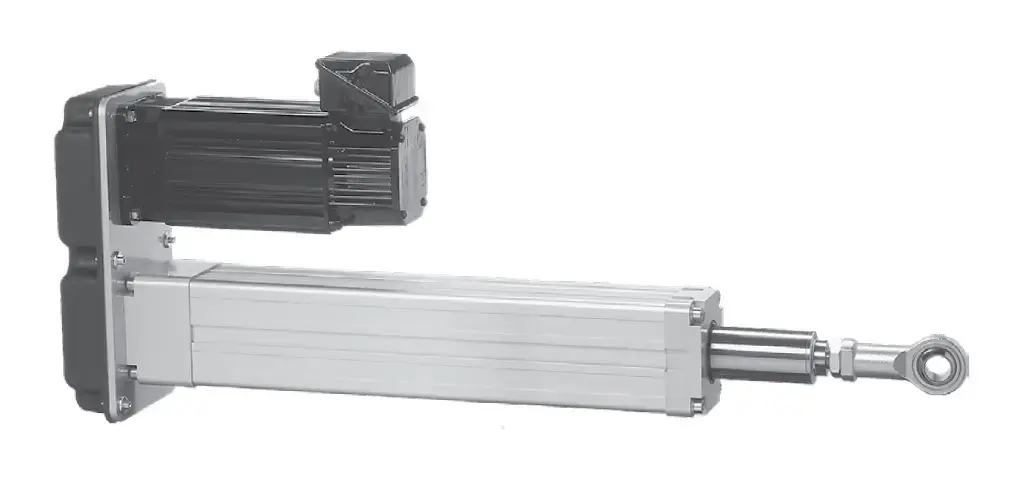
Electric linear actuators convert electrical energy into linear motion through a motor-driven lead screw or ball screw mechanism. The rotating screw drives a non-rotating nut along its axis, creating precise and repeatable linear movement. Directional control is achieved by reversing motor rotation.
- Accuracy: Highly repeatable (±0.013 mm), rigid, and supports multiple stop positions
- Speed: Smooth, variable speed control from 0 to 2 m/s with controlled acceleration
- Environment: Operates between -30°C to +70°C, clean, and energy-efficient
Why Convert to Electric Actuators?
- Superior controllability and positioning
- Reduced system complexity and compact footprint
- Lower energy consumption
- Clean and environmentally friendly operation
- Reduced maintenance requirements
- Improved performance and precision
- Faster installation and commissioning
- Reduced downtime
Application Examples of Electric Actuators
- Lifting devices
- Forklift driver cabins and material handling vehicles
- Agricultural machinery
- Staircase lifts, patient lifts, and wheelchairs
- Testing equipment in waste handling machines
- Antenna positioning systems
- Conveyor height adjustment
- Synchronized lifting applications
Selection Criteria for Electric Actuators
- Required load capacity
- Stroke length
- Cycles per minute and daily operating hours
- Specific application requirements
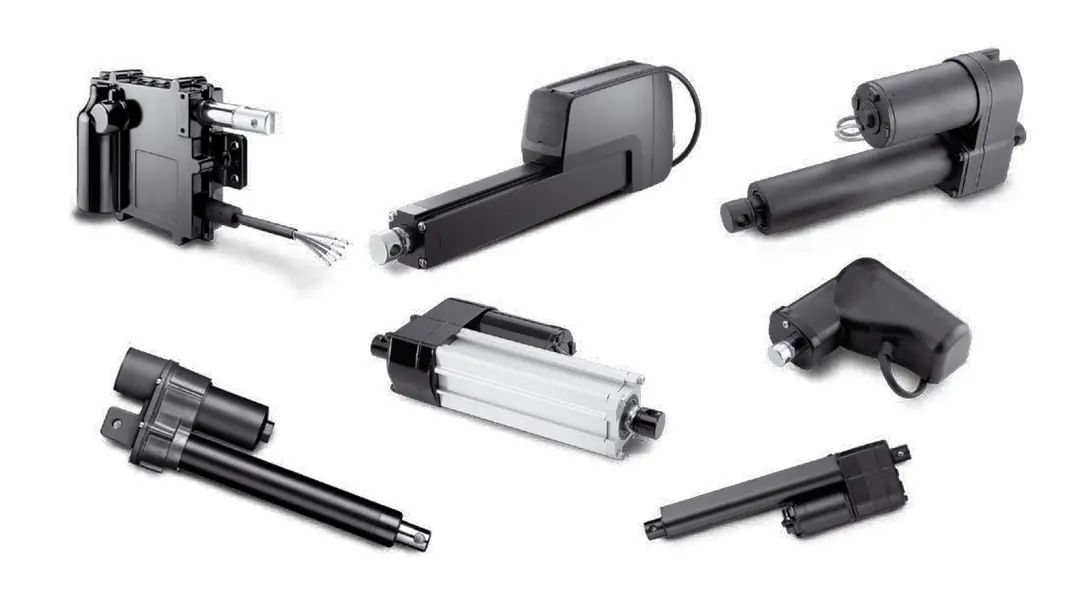
Thomson is a global market leader in electric linear actuators, widely recognized for high-performance solutions in demanding applications such as construction and agricultural equipment.