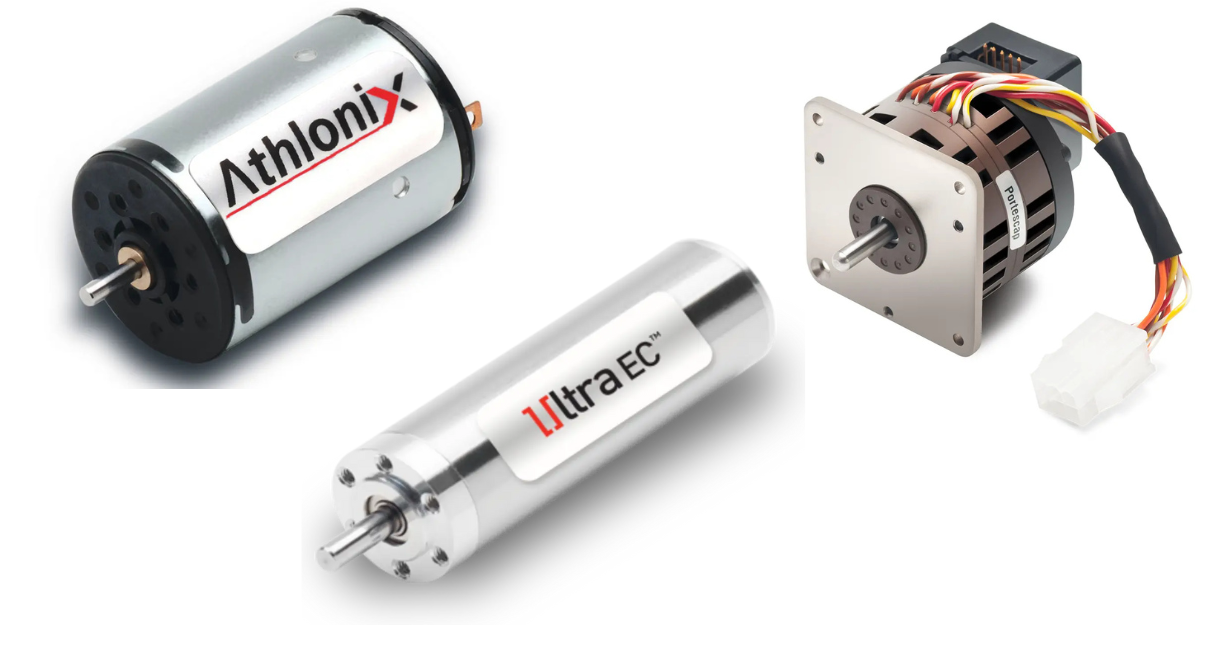
Brush DC Motors in Robotics and Automation
Estimated Read Time: 6–8 minutes
Introduction
Robotics and automation are rapidly transforming industries by improving efficiency, accuracy, and productivity. Motors are the driving force behind these systems, and Brush DC motors remain a popular choice due to their simple construction, cost-effectiveness, and versatile performance.
Understanding Brush DC Motors
Brush DC motors convert electrical energy into mechanical motion using brushes and a commutator. Their straightforward design allows easy speed and position control, making them suitable for a wide range of automation and robotic applications.
Definition of Brush DC Motors
A Brush DC motor is an electromechanical device that converts direct current electrical energy into mechanical rotation through a rotating armature and a stationary magnetic field.
Components and Working Principle
Brush DC motors consist of key components such as the rotor, commutator, brushes, stator, bearings, and housing. Electrical current flows through the brushes and commutator into the rotor windings, creating a magnetic interaction with the stator that produces continuous rotational motion.
Applications of Brush DC Motors
Brush DC motors are widely used in robotics fo