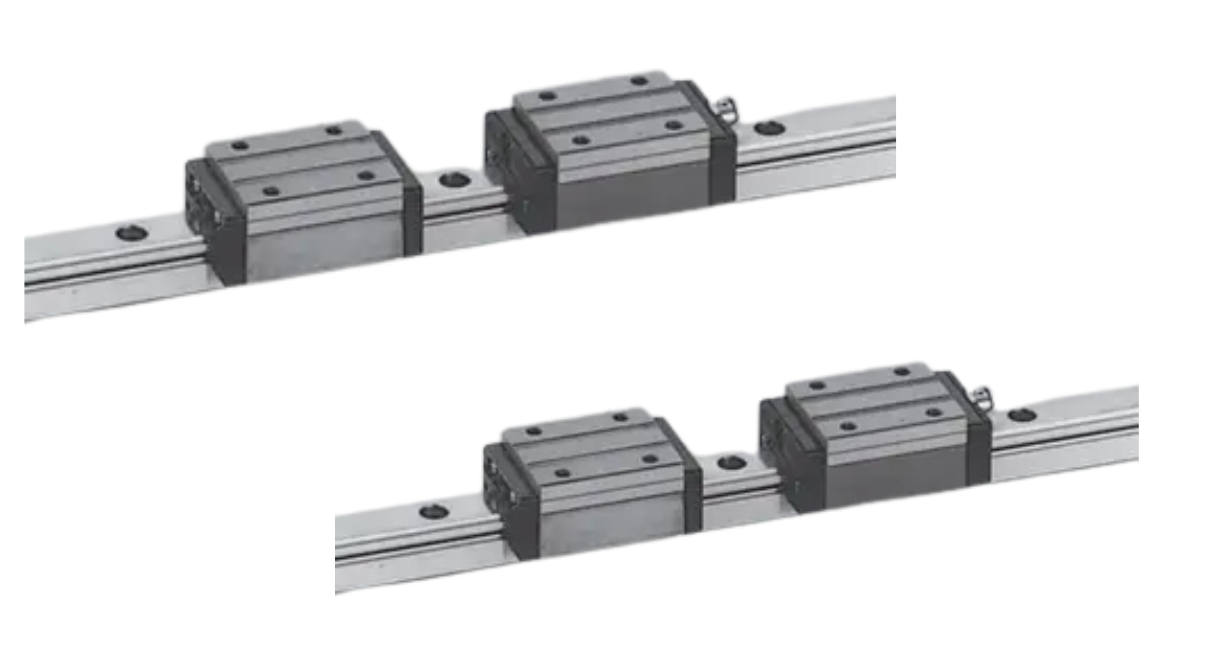
NSK NH vs NS Series Ball Linear Guides — Design, Features & Applications
Estimated Read Time: 6–8 minutes
Introduction
NSK has established itself as a world-renowned leader in precision linear motion solutions, driven by engineering expertise, innovation, and top-quality products. Trusted across industries such as manufacturing, automation, medical equipment, semiconductor production, and aerospace, NSK continues to set benchmarks in dependability, accuracy, and performance.
Within its portfolio, NSK offers two key ball linear guide series — NH and NS. The NH series is compact and lightweight, designed for space-limited yet high-precision applications, while the NS series is built for heavy-duty environments, capable of handling shocks and large loads with superior rigidity.
Design and Construction
NH Series:
Engineered with a compact and lightweight design, ideal for space-limited applications. Features an innovative ball recirculation system for smooth and quiet motion. Reduces friction and noise, enhancing both performance and user experience. Despite its size, offers high load capacity and rigidity for precision applications. Popular in industries like semiconductor manufacturing and medical devices. Delivers minimal deflection, high repeatability, and excellent accuracy.
NS Series:
Built for heavy-duty applications with high loads and harsh working conditions. Sturdy construction and advanced materials provide long-term durability. Uses a Gothic arch groove design for optimized load distribution. Minimizes stress concentration and ensures consistent performance under large loads. Widely used in machine tools, metalworking, automotive manufacturing, and aerospace. Ensures high rigidity and precision even under demanding conditions.
Conclusion
NSK NH and NS series ball linear guides offer solutions for both compact, precision-focused applications and heavy-duty, high-load environments. Understanding their design features, load capacities, and suitable industrial applications allows engineers to make informed decisions for optimal performance and reliability in linear motion systems.